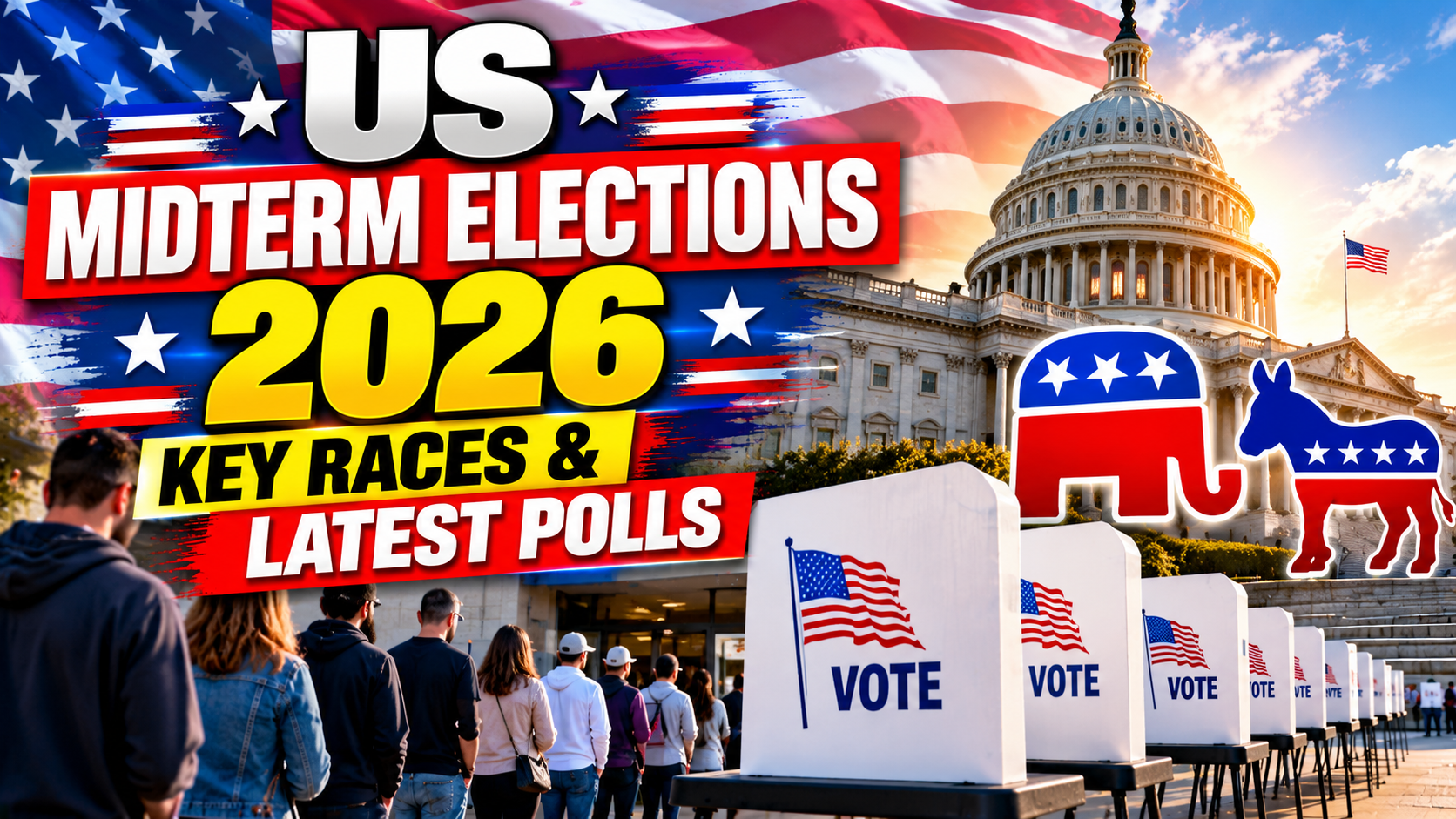
US Midterm Elections 2026 Date, Key Races and Latest Polls The US midterm elections 2026 are approaching, with voters preparing to choose members of Congress and decide which political party will control the US House of Representatives and Senate. The results could influence legislation, government spending, immigration policy and the direction of President Donald Trump’s remaining time in office.
The general election is scheduled for Tuesday, November 3, 2026. Campaigns are entering an important final phase as candidates focus on the economy, healthcare, immigration and other issues affecting American voters. Here is what to know about the election date, competitive races, polling trends and voting information.
When Are the US Midterm Elections in 2026?
The 2026 US midterm elections will take place on November 3, 2026. Midterm elections occur halfway through a president’s four-year term and determine the composition of Congress for the following two years.
According to “USA.gov’s official midterm election guide” (https://www.usa.gov/midterm-elections), voters elect all 435 members of the House of Representatives during each federal election cycle. Approximately one-third of the 100 Senate seats are also contested during a regular election cycle.
State and local elections may appear on the same ballot, depending on where a voter lives. Primary elections and early voting schedules vary by state, so voters should check their local election office for specific dates and requirements.
Why Are the 2026 Midterms Important?
The midterm elections will determine which party controls the two chambers of Congress. That outcome can affect whether the president’s legislative proposals advance, face significant opposition or require bipartisan support.
Congress has authority over federal legislation, government spending and oversight of the executive branch. Control of the House and Senate can therefore influence debates on taxes, healthcare, border security, energy and foreign policy.
The election is also an important test of voter sentiment about the administration’s performance. However, midterm results are decided by individual races across the country, and national political trends do not necessarily predict every local outcome.
Which House Races Are Being Watched?
The House of Representatives is a major focus of the 2026 election because every seat is up for election According to recent reporting by “Reuters world/us/midterm-strategy-driving-democrats-deep-into-trump-country-2026-10-10/), the Democratic Congressional Campaign Committee has expanded its efforts to compete in Republican-held districts, including areas that strongly supported Trump in the 2024 presidential election.
The strategy aims to make Republicans defend more districts and potentially redirect campaign resources. Republicans, meanwhile, are working to protect their seats and maintain control of the chamber.
Several competitive contests are attracting attention, including races in New York, New Hampshire, Nevada, New Mexico and Ohio. The importance of each district will depend on candidate performance, turnout and developments during the final weeks of the campaign.
What Is Happening in the Senate Races?
Senate elections are another important part of the midterm contest. Because senators serve six-year terms, only a portion of the Senate is elected every two years.
The party that controls the Senate has significant influence over legislation, committee investigations and confirmation votes for many presidential appointments.
Competitive Senate contests may become especially important if the overall balance of power is close. Candidate backgrounds, fundraising, local economic conditions and voter participation can all affect individual races.
National polling alone cannot establish which party will win control. Each state has a different political environment, and the outcome depends on the races being contested there.
What Do the Latest Polls Say?
Recent polling and campaign coverage suggest that the economy remains a major concern for voters heading into November.
A Reuters/Ipsos poll published on October 9 reported widespread concern about rising living costs, with respondents across party lines expressing dissatisfaction with prices and the relationship between wages and household expenses.
Campaign reporting has also highlighted debates over immigration, healthcare costs, tariffs and the US conflict with Iran. Democrats are attempting to use concerns about the administration’s policies to win support, while Republicans are defending their record and emphasizing their own economic and policy priorities.
However, polls are snapshots of public opinion, not final election results. Different surveys use different samples, methods and questions. A national poll also does not necessarily reflect the preferences of voters in a particular congressional district or state.
Readers should compare multiple recent polls and pay attention to the publication date, sample size and margin of error before drawing conclusions.
What Issues Could Influence Voters?
Several issues are likely to shape the final weeks of the campaign.
The economy and cost of living
Prices for groceries, fuel, housing and other necessities remain central to many voters’ concerns. Candidates are presenting different proposals on inflation, jobs, taxes and household expenses.
Immigration and border security
Immigration policy continues to be a major national debate. Candidates differ on border enforcement, legal immigration, asylum procedures and the treatment of people living in the United States without legal status.
Healthcare
Healthcare affordability, insurance coverage and the cost of prescription medicines are also important topics. Congressional decisions can influence federal healthcare programs and related spending.
Foreign policy
The US role in international conflicts and its relationships with other countries may influence voters’ views of the administration and congressional candidates The relative importance of these issues will vary by state, district and individual voter.
How Can Americans Check Voting Information?
People planning to vote should confirm their registration status, polling location and applicable deadlines through official election authorities.
Useful resources include:
USA.gov — Midterm Elections” (https://www.usa.gov/midterm-elections): explains congressional elections and provides voting information.
Federal Election Commission” (https://www.fec.gov/): provides information about federal elections and campaign finance.
National Association of Secretaries of State” (https://www.nass.org/): helps voters find state election websites.
Early voting, absentee voting and registration deadlines differ across states. Voters should not rely on a deadline from another state or an outdated social media post.
What Happens After Election Day?
After voting closes, election officials count ballots and report results according to state procedures. Some races may be called relatively quickly by news organizations, while close contests can take longer to resolve.
Official results are determined through the relevant election authorities and certification process. Recounts or legal proceedings may affect the timeline in particularly close races.
The new Congress is scheduled to begin its next term in January 2027. The final balance of power will help determine the legislative agenda and the relationship between Congress and the White House.
Frequently Asked Questions
What is the date of the 2026 US midterm elections?
The regularly scheduled federal general election date is Tuesday, November 3, 2026.
How many House seats are being contested?
All 435 voting seats in the US House of Representatives are up for election.
Are all Senate seats up for election in 2026?
No. Approximately one-third of the Senate’s 100 seats are contested in a regular election cycle.
What are the main issues in the midterm elections?
Major campaign issues include the economy, cost of living, immigration, healthcare and foreign policy. Their importance varies across different states and districts.
Do polls guarantee the election outcome?
No. Polls measure public opinion at a particular time and have limitations. Actual results depend on voting, turnout and the outcome of individual races.
Where can voters find official election information?
Voters can visit USA.gov and their state election office to check registration, polling locations, voting options and deadlines.
Final Thoughts
The US midterm elections 2026 will shape the balance of power in Congress and influence the country’s legislative direction. With the November 3 election approaching, competitive House and Senate races, economic concerns and national policy debates are drawing increasing attention.
Polling can help explain the campaign environment, but it cannot guarantee a result. For the most reliable information, readers should follow recent reporting and official election resources as voters prepare to cast their ballots.