Oil Prices Today How Middle East Tensions Are Affecting Global Markets Oil prices remain a major focus for global markets as geopolitical tensions in the Middle East raise concerns about energy supplies, shipping routes and fuel costs. Recent trading has been volatile, with investors responding to developments involving oil-producing countries, maritime security and potential disruptions to crude oil transportation.
For consumers, businesses and policymakers, changes in oil prices can affect everything from gasoline and diesel costs to transportation expenses and inflation. Understanding what drives these movements helps explain why developments thousands of miles away can influence household budgets around the world.
Oil Prices Today: Latest Reported Market Levels
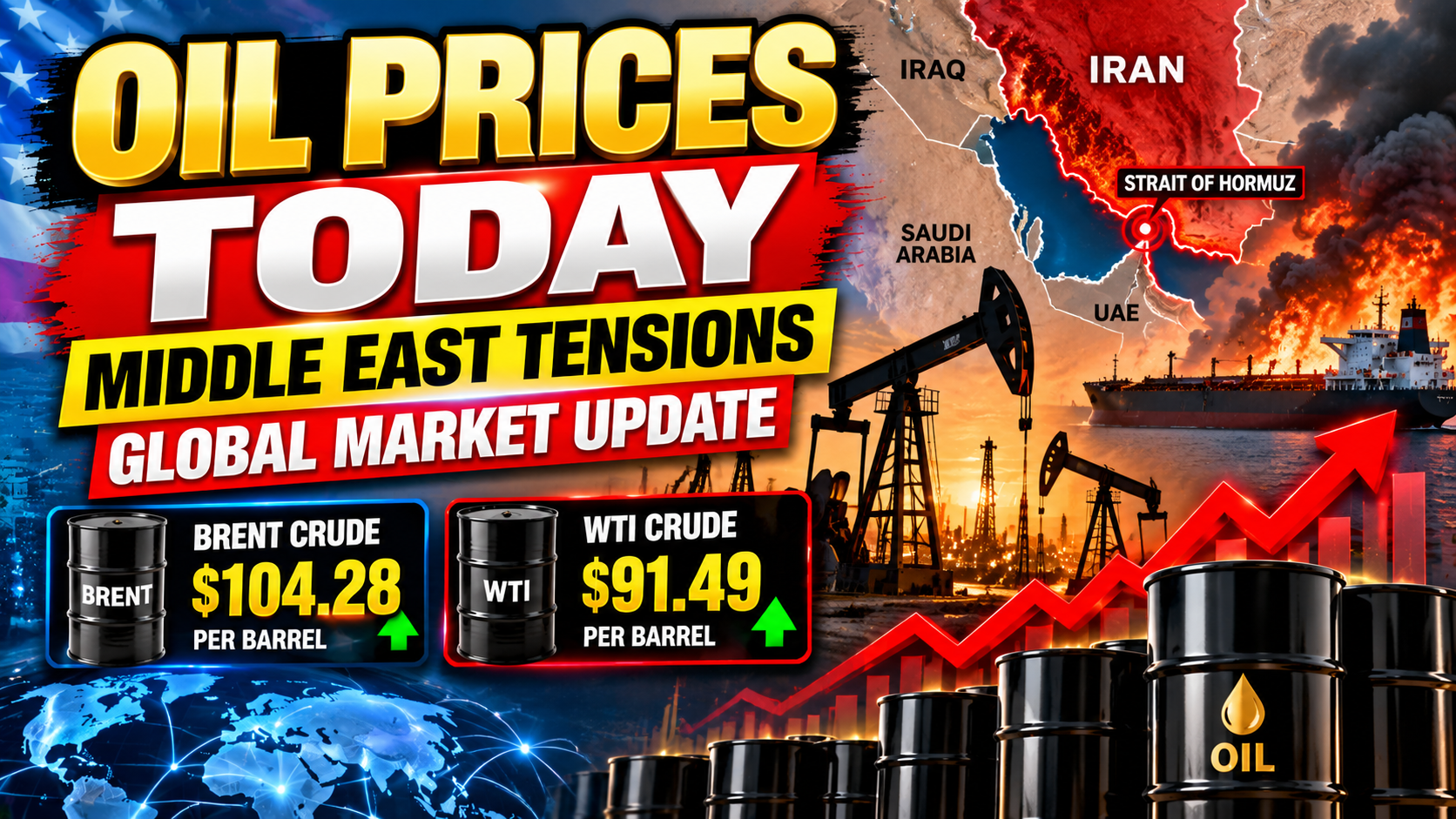
In its October 8, 2026, market report, Reuters reported that Brent crude settled at $104.28 per barrel, while US West Texas Intermediate (WTI) crude settled at $91.49 per barrel. These were closing prices for that trading session, not live prices. <a href=”https://www.reuters.com/business/energy/oil-rises-middle-east-supply-concerns-persist-amid-shipping-attacks-2026-10-08/”>Read the Reuters oil market report</a>.
Brent and WTI are major crude oil benchmarks. Brent is used internationally, while WTI is a key US benchmark.
Oil markets trade on weekdays, so prices can change when trading resumes after a weekend. Readers checking oil prices today should confirm the latest available quote and its timestamp before relying on a particular figure.
How Middle East Tensions Affect Oil Prices
The Middle East is an important region for global energy production and transportation. When conflict threatens oil fields, export terminals, pipelines or shipping routes, traders may become concerned that fewer barrels will reach international markets.
These concerns can push prices higher even before a major supply shortage occurs. Buyers may pay more because they expect future deliveries to become more difficult or expensive.
Recent reports have highlighted risks involving commercial shipping and the Strait of Hormuz, a strategic waterway used to transport significant volumes of oil and other energy products.
However, not every security incident automatically results in a lasting price increase. The market also considers whether exports continue, whether alternative routes are available and whether governments can release emergency supplies.
Why the Strait of Hormuz Matters
The Strait of Hormuz connects the Persian Gulf with the Gulf of Oman and the wider ocean shipping network. It is a critical route for energy exports from several major oil-producing countries.
If tanker traffic through the strait is disrupted, exporters may face delays and higher shipping costs. Some shipments could use alternative routes. However, these routes have limited capacity and may not replace normal shipping volumes.
The potential impact depends on the scale and duration of any disruption A brief delay may have a limited effect, while a prolonged interruption could tighten global supply and increase uncertainty For that reason, energy traders closely follow maritime security developments, shipping activity and announcements from oil-producing countries.
How Higher Oil Prices Can Affect Consumers
Crude oil is a key input in producing gasoline, diesel, jet fuel and other petroleum products When crude prices rise, fuel costs may also increase, although the timing and size of the change vary by market.
Several factors influence what consumers eventually pay at the pump, including refining costs, taxes, distribution expenses and local competition.
Crude oil is used to produce gasoline, diesel, jet fuel and other petroleum products. When crude prices rise, fuel costs may also increase. The timing and size of these changes vary by market.
Some businesses absorb these costs, while others pass part of them on to customers If higher energy costs persist across the economy, they can contribute to inflationary pressure However, retail fuel prices do not move in perfect step with crude oil. Local conditions and the prices of refined products also matter.
What Are Brent and WTI Crude Oil?
Brent is an international oil benchmark. It is commonly used to price crude oil in Europe, Africa and parts of the Middle East. WTI is a major US benchmark. Its price depends on domestic production, storage, transportation and demand.
The price difference between Brent and WTI is called the Brent-WTI spread. This gap changes with supply, demand and transportation costs. Comparing both benchmarks helps readers understand regional and global oil market trends.
The difference between their prices is often called the Brent-WTI spread. That gap can widen or narrow when international supply risks change or when US production and inventories move differently from global conditions Comparing both benchmarks gives readers a clearer view of how regional and international factors influence energy markets.
Could Oil Prices Rise Further?
Oil prices depend on several factors. Supply disruptions and shipping risks can push prices higher. Damage to major production facilities may also reduce supply. However, strong inventories and lower demand can help prices fall. Strong demand or lower-than-expected inventories can also support prices.
On the other hand, prices could ease if tensions decline, shipping routes operate more normally, production increases or emergency stock releases improve supply availability.
The US Energy Information Administration publishes regular analysis of energy markets and price expectations. Its forecasts are based on assumptions that may change as new information becomes available Readers should therefore treat market forecasts as estimates rather than promises about future prices.
What Should Readers Watch Next?
Several indicators can help explain oil price movements:
- Middle East developments: Security changes can affect oil supply.
- Shipping activity: Disruptions can increase transportation costs.
- Oil inventories: US data provides clues about supply and demand.
- Producer decisions: Output changes can affect global availability.
- Economic demand: Travel and industrial activity influence oil consumption.
Frequently Asked Questions
What are the latest reported oil prices?
Reuters reported that Brent crude settled at $104.28 per barrel and US WTI at $91.49 on October 8, 2026. These figures are historical closing prices, not live quotes.
Why do Middle East tensions affect oil prices?
Conflict can threaten production, export facilities and shipping routes. The possibility of reduced supply or higher transportation costs can increase market uncertainty and influence prices.
What is the difference between Brent and WTI?
Brent is a widely used international benchmark, while WTI is a major US crude oil benchmark. Their prices reflect different regional supply, demand and transportation conditions.
Do higher crude oil prices always mean more expensive gasoline?
Not immediately or by the same amount. Retail gasoline prices also depend on refining costs, taxes, distribution expenses and local market conditions.
Where can readers check reliable oil market updates?
Readers can consult Reuters for market reporting and the US Energy Information Administration for official energy data, analysis and forecasts.
Final Thoughts
Oil prices remain sensitive to Middle East developments because global energy markets depend on reliable production and transportation. Changes in security risks, shipping activity, inventories and demand can all influence the price of crude oil.
For anyone following oil prices today, the most useful approach is to check the latest dated market figures, understand the difference between Brent and WTI, and compare multiple reliable sources.