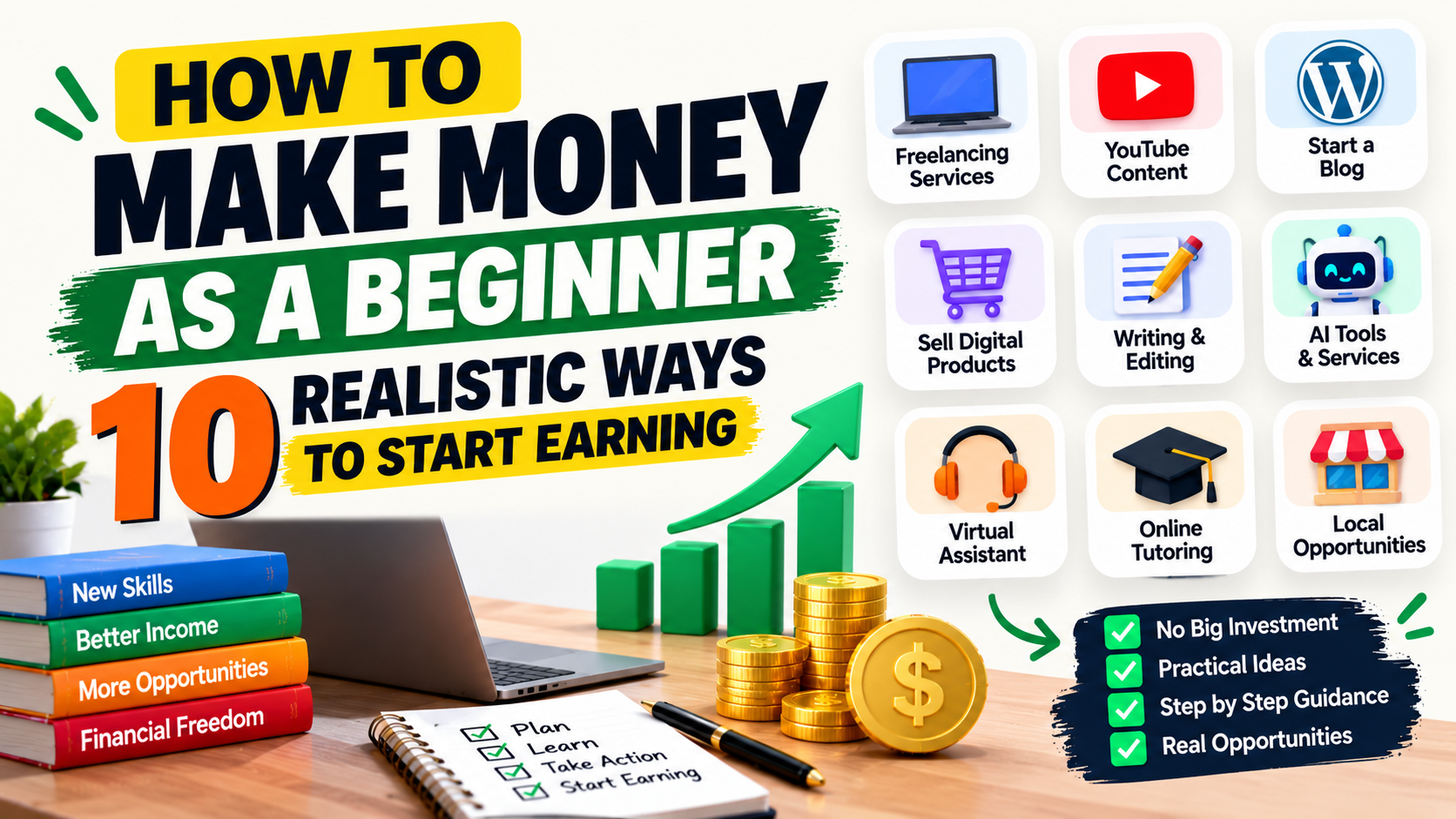
How to Make Money as a Beginner Earning Making money for the first time can feel confusing. You may have a phone, internet access, and some free time, but you might not know which opportunity is worth pursuing. With so many online earning claims on the internet, it can be difficult to separate practical ideas from unrealistic promises.
The good news is that you do not need to start with a large investment or an advanced qualification to explore different earning opportunities. You can begin by using a skill you already have, learning something useful, or offering a simple service to people who need it.
If you want to learn how to make money as a beginner, the key is to start small, understand the value you can provide, and build experience gradually. Here are 10 realistic options to consider.
1. Offer Freelance Services
Freelancing allows you to provide a service to individuals or businesses on a project basis. You do not necessarily need previous paid experience to begin building the skills required for entry-level work.
Possible services include content writing, basic graphic design, video editing, website maintenance, and document formatting.
Start by choosing one service you can learn and practise. Create a few sample projects that demonstrate your ability, then use them to explain what you can offer potential clients.
Your first project may take time to find. Focus on delivering reliable work rather than promising results you cannot control.
2. Become a Virtual Assistant
A virtual assistant helps individuals or businesses with administrative tasks that can be completed remotely.
Depending on your abilities, these tasks may include organising spreadsheets, formatting documents, maintaining schedules, researching information, or managing basic records.
Good communication, attention to detail, and organisation are important for this type of work. You should also understand how to handle private information responsibly.
To get started, practise common office tasks and prepare examples of your work. Look for legitimate opportunities that clearly explain the responsibilities, payment arrangements, and required skills.
3. Learn Basic Video Editing
Short videos are used by creators, businesses, educators, and online communities. This creates opportunities for people who can turn raw footage into clear, engaging content Begin with basic editing skills such as trimming clips, adjusting audio, adding readable captions, and arranging footage in a logical order.
You can practise with your own recordings or material you have permission to use. Create a small portfolio showing different editing techniques.
You do not need to purchase expensive equipment immediately. Learn the fundamentals with available tools before deciding whether paid software would genuinely help.
4. Offer Writing and Editing Services
If you enjoy writing, you can explore services such as blog article drafting, proofreading, product descriptions, and website content.
Start by improving your grammar, research skills, and ability to explain ideas clearly. Prepare original samples in the subject areas you understand.
Writing tools, including AI assistants, may help with brainstorming or editing, but the final work should be accurate, original, and checked by a person. Never invent facts or copy another writer’s work.
Clients generally need content that serves a purpose, so learn how to follow instructions, meet deadlines, and revise work when appropriate.
5. Create a Blog or Informational Website
A blog can help you share knowledge about a subject you understand. Possible topics include technology tutorials, software guides, cooking, education, and practical hobbies.
Choose a topic that gives you enough useful questions to explore without forcing you to publish repetitive articles.
Over time, a blog may generate income through display advertising, affiliate marketing, sponsorships, or digital products. However, these methods require suitable content, an audience, and compliance with relevant platform policies.
A blog is usually a longer-term project rather than a dependable way to earn money immediately. Focus on helping readers first and evaluate monetization when your website is ready.
6. Sell Original Digital Products
Digital products are files or resources that customers can purchase and access electronically. Examples include planners, printable worksheets, original templates, study resources, and design assets.
The best starting point is to identify a specific problem that a simple product could solve For example, someone who understands project organisation might create a practical planning template. A designer could develop a set of original social media layouts.
Before selling anything, test the product, explain exactly what is included, and check the commercial-use terms of any assets or software involved.
7. Provide Basic Website Services
Many small businesses need help with straightforward website tasks, such as updating text, formatting pages, adding images, or organising content.
Learning a website platform such as WordPress can help you understand how websites are managed. You can practise by creating a demonstration website or a personal portfolio.
Start with tasks you can complete confidently. Website security, backups, payments, and technical changes require additional care, so do not accept work beyond your abilities A small portfolio can help prospective clients understand your skills and the services you offer.
8. Offer Tutoring or Educational Support
If you understand a subject well, you might consider tutoring learners who need help with particular concepts Possible areas include mathematics, languages, basic computer skills, and other subjects you can teach accurately.
Begin by identifying the topics you can explain clearly. Prepare examples and practice exercises, and agree on the scope of each session beforehand.
Tutoring is not just about knowing the answer. You also need patience, clear communication, and the ability to adapt your explanations to the learner’s level.
9. Find Local Service Opportunities
Earning opportunities are not limited to the internet. Local businesses and individuals may need assistance with tasks such as basic computer work, product photography, document preparation, or managing online listings.
Think about the skills people in your community might need and how you could provide a useful service Start with a clearly defined offer. Explain what you will deliver, how long it may take, and what the agreed price covers.
Local work can also help you build practical experience and references. Follow appropriate safety precautions when meeting clients, and involve a trusted adult where necessary.
10. Sell Products You Can Make or Source Responsibly
Selling physical products is another option, provided you understand the costs and responsibilities involved Depending on your interests, you might create handmade items, sell original designs, or help a legitimate business promote its products.
Before starting, calculate the cost of materials, packaging, delivery, platform fees, and any expected returns or refunds. A sale is not the same as profit.
Avoid purchasing large amounts of inventory before testing whether people actually want the product. Begin on a manageable scale and follow the applicable consumer protection and selling rules.
How to Choose the Right Way to Start
With so many possibilities, choosing one idea can be harder than beginning the work itself.
Use these questions to narrow your options:
What can I already do? Consider skills you have developed through school, hobbies, personal projects, or previous experience.
What am I willing to learn? Some opportunities require practice before you can offer a useful service.
Who needs this service or product? Identify a real audience rather than assuming everyone will be interested.
What will it cost to begin? Include tools, materials, platform fees, and other expenses.
How will I demonstrate my ability? A portfolio, sample, or small demonstration can help others evaluate your work.
Choose one realistic option and test it before committing significant money or time.
A Simple 30-Day Starting Plan
You can use the following framework to organise your first month.
Week 1: Choose a direction. Select one service, skill, or product idea. Research the basics and identify what potential customers need.
Week 2: Practise. Complete sample projects, improve your work, and identify gaps in your knowledge.
Week 3: Prepare to offer your work. Create a simple portfolio or product sample and write a clear description of what you provide.
Week 4: Explore opportunities. Contact suitable potential clients, research legitimate platforms, or test your product with an appropriate audience.
This plan is intended to help you get organised, not to promise that you will earn money within 30 days. Results depend on demand, your abilities, available time, and other circumstances.
Mistakes Beginners Should Avoid
One common mistake is expecting immediate results. Learning a skill and finding customers often takes longer than expected.
Another is spending money on expensive courses or tools before understanding what is actually required. Start with available learning resources and make purchases only when there is a clear reason.
Be cautious of schemes that promise guaranteed income, require unexplained upfront payments, or ask for account passwords and verification codes. Check the legitimacy of a company or platform before sharing information or accepting work.
Finally, do not exaggerate your experience. Being honest about your abilities and improving through practice is a more sustainable way to build trust.
Conclusion
Learning how to make money as a beginner starts with finding a useful way to help someone. Freelancing, tutoring, writing, website services, and selling products are different paths, and each requires its own skills and preparation.
You do not have to try every option at once. Choose one that fits your interests and resources, practise consistently, and look for evidence that people need what you offer.
There is no guaranteed shortcut to earning money. A realistic plan, useful skills, careful spending, and patience can help you make more informed decisions as you build experience.

Frequently Asked Questions
What is the easiest way for a beginner to start earning?
There is no single easiest option for everyone. Offering a simple service that matches your existing skills may be a practical starting point because you can practise and demonstrate your ability before investing heavily.
Can I make money without investing a lot?
Some services can be started using free learning resources and tools you already have. However, every opportunity has costs in time, effort, and sometimes money. Check the requirements before committing.
How long does it take to earn your first money?
There is no fixed timeline. It depends on the service or product, your skills, customer demand, and how effectively you find suitable opportunities.
Is online earning always legitimate?
No. Legitimate opportunities exist, but scams also occur. Be suspicious of guaranteed earnings, pressure to pay upfront, and requests for passwords or verification codes.
Can students start earning money?
Students can develop skills and explore age-appropriate opportunities, but they should check the age requirements of platforms and payment services. Where required, involve a parent or guardian and make sure work does not interfere with education or safety.