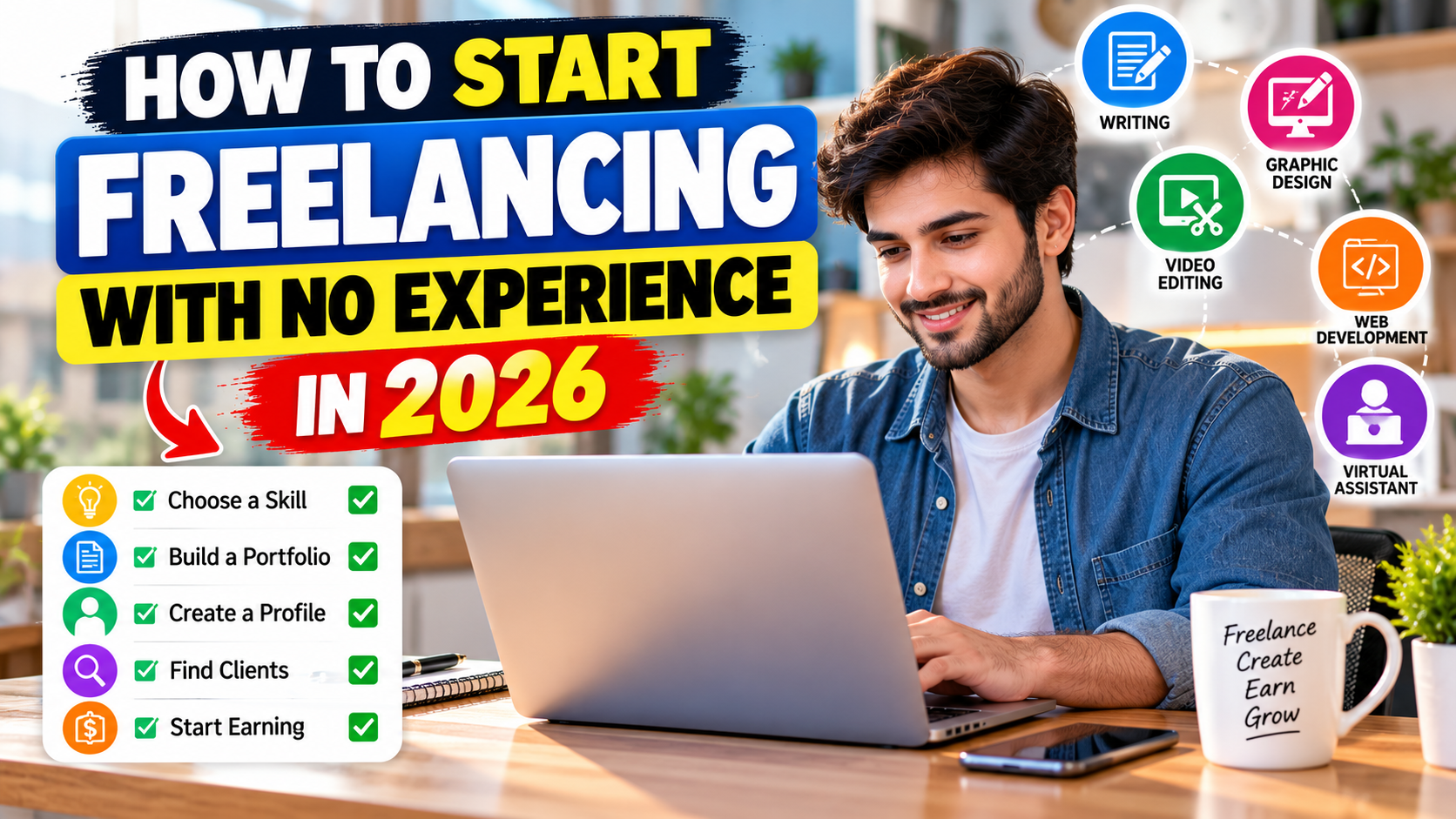
How to Start Freelancing With No Experience in 2026 Starting a freelance career can feel difficult when you have no professional experience, no clients, and no portfolio. However, freelancing can be a practical way to develop valuable skills, work with clients, and build an income over time.
If you are wondering how to start freelancing with no experience, the best approach is to choose one service, practise it, create sample work, and learn how to communicate with potential clients. You do not need to master everything before getting started This beginner’s guide explains the essential steps to start freelancing in 2026.
What Is Freelancing?
Freelancing means providing services to clients on a project, contract, or hourly basis rather than working as a permanent employee. Freelancers may work remotely and serve clients from different locations.
Common freelance services include writing, graphic design, video editing, website development, translation, and virtual assistance.
Freelancing offers flexibility, but earnings are not guaranteed. Finding clients, completing projects, and building a reputation takes time and consistent effort.
1. Choose a Beginner-Friendly Freelance Skill
Your first step is to select a service that matches your interests and abilities. Avoid trying to learn several unrelated skills at once.
Here are some options to consider:
Content Writing
Write blog posts, website pages, product descriptions, or informational articles. Good writing, research, grammar, and editing skills are important.
Graphic Design
Create social media graphics, banners, thumbnails, and simple marketing materials using design tools.
Video Editing
Edit short videos, add captions, improve pacing, and prepare content for social media platforms.
Virtual Assistance
Help clients with tasks such as organising documents, managing spreadsheets, scheduling, and basic online research.
Website Development
Learn how websites work and practise building simple websites using WordPress or other suitable tools.
Choose one skill that you can practise regularly. A clear service is easier to explain to clients than a long list of unrelated abilities.
2. Learn the Basics Before Looking for Clients
You do not necessarily need an expensive course to begin learning. Free tutorials, documentation, and practice projects can help you understand the fundamentals Create a simple learning routine. For example, spend time studying a concept, practising it, and reviewing your work.
Do not rely only on watching tutorials. Clients generally want to see what you can actually produce, so practical experience matters.
3. Build a Portfolio Without Paid Experience
A portfolio is a collection of examples that demonstrate your skills. You can create one before receiving your first paid project.
For example:
- Writers can prepare two or three original sample articles.
- Designers can create sample social media posts.
- Video editors can produce short demonstration edits using permitted footage.
- Virtual assistants can create sample spreadsheets and organisational templates.
- Website developers can build a small demonstration website.
- Clearly label practice projects as samples. Never claim that a fictional project was completed for a real client.
You can display your work on a simple portfolio website, a professional profile, or a shareable document.
4. Create a Professional Freelance Profile
Your profile should explain what you do, who you help, and what service you offer.
Use a clear headline, a concise description, and relevant portfolio examples. Avoid vague statements such as “I can do every type of online work.”
A stronger profile might say:
“I help small businesses create clear, well-organised blog content. My services include article research, drafting, editing, and formatting.”
Only mention skills you can genuinely provide. An honest profile builds more trust than exaggerated claims.
5. Choose Suitable Freelance Platforms
Freelance marketplaces can help connect service providers with clients. Examples include Upwork, Fiverr, and Freelancer.
Before creating an account, review each platform’s current age requirements, identity verification rules, fees, and payment options. Some services require users to be adults; younger users should follow the platform’s rules and involve a parent or guardian where permitted.
You can also find opportunities through professional networking, local businesses, and your own website. Avoid anyone who asks you to pay an unexplained fee just to receive a job.
6. Start With Small, Clearly Defined Projects
When you are new, focus on projects you can complete reliably. A small, well-defined assignment can help you practise communication, deadlines, and client expectations.
Before accepting a project, clarify:
- What work is included
- The expected deadline
- The agreed price and payment method
- How revisions will be handled
- How the final work will be delivered
Do not promise results you cannot control, such as guaranteed search rankings or viral views.
7. Write Personalised Proposals
A proposal should show that you understand the client’s needs. Avoid sending the same generic message to every potential client.
A useful proposal briefly explains your understanding of the task, the approach you would take, and a relevant sample of your work.
For example, if a client needs a blog article, mention how you would research the topic, organise the headings, and proofread the final draft. Keep your message professional and concise.
8. Build Trust Through Reliable Work
Your reputation grows when you communicate clearly and meet agreed deadlines. Ask questions if instructions are unclear, provide progress updates when appropriate, and check your work before delivery.
After completing a project, you can politely ask the client for feedback. Use genuine reviews and never purchase fake ratings.
Over time, a strong portfolio and positive client relationships may help you compete for more suitable projects.
9. Avoid Common Freelancing Scams
Beginners can be targeted by people offering unrealistic earnings or guaranteed jobs. Protect yourself by watching for warning signs.
Be cautious if someone:
- Promises unusually high earnings for almost no work
- Requests an upfront payment to unlock a job
- Asks for passwords, verification codes, or unnecessary sensitive information
- Sends suspicious links or files
Pressures you to move payment outside a platform in violation of its rules
Read platform policies, verify clients where possible, and use secure payment arrangements. Never share account passwords or one-time verification codes.
10. Create a Simple 30-Day Starting Plan
You can use this plan to organise your first month:
- Week 1: Choose one skill and learn its fundamentals.
- Week 2: Complete practice projects and improve your work.
- Week 3: Prepare a portfolio and write a professional profile.
- Week 4: Research suitable opportunities, send personalised proposals, and review the feedback you receive.
This is a starting framework, not a promise that you will find a client within 30 days. Progress depends on your skills, available time, demand, and competition.
Conclusion
Learning how to start freelancing with no experience begins with a practical plan. Choose one skill, practise it, create honest portfolio samples, and look for projects that match your abilities.
You may not earn money immediately, and your first attempts may not succeed. Treat each project and application as a chance to improve. With patience, consistent learning, and professional communication, you can gradually build the foundation for a freelance career.

Frequently Asked Questions
Can I start freelancing with no experience?
Yes. You can begin by learning a skill and creating sample projects. Paid work is not guaranteed, so focus on demonstrating your ability and building trust.
Which freelance skill is best for beginners?
It depends on your interests and strengths. Writing, basic graphic design, video editing, virtual assistance, and WordPress development are possible starting points.
Do I need money to start freelancing?
You can learn many skills using free resources and create a basic portfolio at little or no cost. Some tools and platforms may charge fees, so check their terms before paying.
How long does it take to get a first freelance client?
There is no fixed timeline. It depends on the quality of your work, the demand for your service, your proposals, and competition.
Is freelancing a guaranteed way to earn money?
No. Freelancing income can be irregular, especially at the beginning. Avoid anyone promising guaranteed jobs or fixed earnings without a legitimate agreement.