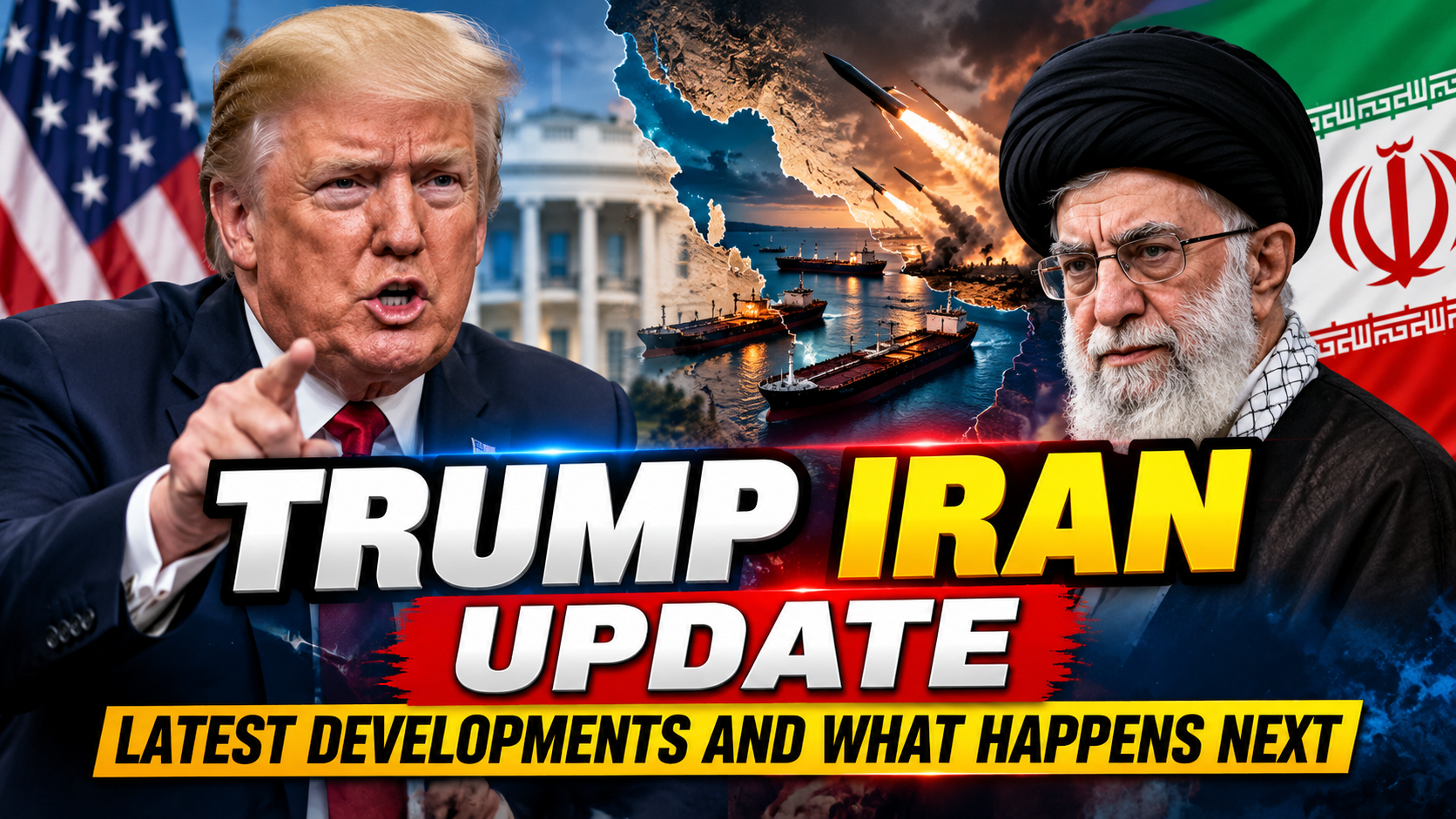
Trump Iran Update Latest News and What Happens Next The latest Trump Iran update centers on diplomatic discussions, military tensions and concerns about international oil supplies. On October 8, US President Donald Trump said Washington was having productive discussions with Iran and that the United States would not launch an attack before the November midterm elections.
The announcement comes amid continuing tensions over the Strait of Hormuz, a strategic waterway through which a significant share of the world’s oil supply normally travels. Although Trump’s comments have raised hopes for diplomacy, important disagreements remain, and the situation could change as negotiations continue.
Trump Iran Update: What Happened?
According to a Reuters report published on October 8, Trump said the United States and Iran were engaged in discussions aimed at ending the ongoing conflict. He also ruled out launching a new US attack before the November congressional elections.
However, the president did not provide detailed information about the discussions or announce a final agreement.
The statement represents a diplomatic development, but it does not mean that the conflict has ended. Both countries continue to face major disagreements, including questions about Iran’s nuclear program, sanctions and maritime security.
For the latest verified reporting, readers can consult “Reuters’ coverage of US-Iran talks world/trump-us-having-productive-talks-with-iran-will-not-attack-before-us-elections-2026-10-08/).
Why Are the United States and Iran in Conflict?
Relations between Washington and Tehran have been shaped by long-running disagreements over nuclear activities, economic sanctions, regional security and military operations.
The current conflict has increased these tensions and affected shipping routes, energy markets and diplomatic relations across the Middle East.
The United States has maintained economic and maritime pressure on Iran, while Iranian officials have opposed US demands and warned against further military action.
A lasting settlement would likely require progress on several issues, including security arrangements, sanctions and Iran’s nuclear activities. The precise terms remain uncertain, and neither side has announced a comprehensive final agreement.
Strait of Hormuz Tensions Raise Global Concerns
The Strait of Hormuz remains one of the most important issues in the latest US-Iran developments.
The narrow waterway connects the Persian Gulf with the Gulf of Oman and the wider Arabian Sea. It is a major route for crude oil and other energy shipments from Gulf producers to international markets.
According to a Washington Post report published on October 8, renewed attacks on vessels had disrupted shipping through the strait. The report cited data indicating a sharp decline in crude oil shipments during the previous week.
Disruptions to this route can increase transportation costs, delay deliveries and create uncertainty for energy markets The situation also creates risks for commercial vessels and their crews. Shipping companies must consider security warnings, insurance costs and the possibility of further disruption when planning routes.
Trump Iran Update: Latest Developments
Energy markets often react to developments that could interrupt oil production or transportation When traders fear that supplies may become less available, crude oil prices can rise. If diplomatic progress reduces those concerns, prices may fall.
Reuters reported on October 9 that oil prices declined after Trump’s comments about talks with Iran eased some concerns over future supplies. Brent crude futures fell to around $103.18 per barrel, while US West Texas Intermediate crude traded near $91 per barrel in the report These figures reflect market conditions at the time of reporting and may change throughout the day.
For consumers, prolonged disruption could contribute to higher gasoline, transportation and production costs. However, retail fuel prices also depend on refining costs, taxes, local supply and other market factors.
Will the United States Attack Iran Before the Midterm Elections?
On October 8, Trump said the United States would not attack Iran before the November midterm elections. His comments offered a clearer public statement about the administration’s immediate position Nevertheless, the announcement should not be interpreted as a permanent end to military risks.
Diplomatic negotiations can stall, and statements about future policy do not guarantee that all security concerns will disappear. Reports have also indicated that US military planning continues, although planning alone does not establish that an attack has been ordered.
The next developments will depend on negotiations, decisions by both governments and conditions affecting maritime security.
What Happens Next in US-Iran Relations?
Several developments will be important to watch in the coming days.
1. Progress in diplomatic talks
Further statements from US and Iranian officials may clarify whether discussions are moving toward a ceasefire or a broader agreement.
2. Security in the Strait of Hormuz
Changes in vessel traffic, reported attacks and maritime warnings could affect global energy markets and shipping operations.
3. Oil market movements
Crude oil prices may continue reacting to diplomatic announcements, supply disruptions and changes in shipping activity.
4. Decisions on sanctions and nuclear policy
Any meaningful agreement may require progress on sanctions, nuclear-related demands and wider security concerns These are areas to monitor, not predictions that a specific outcome is guaranteed.
Final Thoughts
The latest Trump Iran update points to continued diplomatic discussions alongside significant regional tensions. Trump’s October 8 statement that the United States would not attack Iran before the November midterm elections has provided some reassurance to markets, but it has not resolved the wider conflict.
The Strait of Hormuz remains a critical concern because disruptions can affect energy supplies, shipping costs and international markets. The direction of US-Iran relations will depend on whether negotiations produce concrete progress and whether maritime security improves.
Readers should follow reliable news organizations and official announcements for confirmed developments. The situation remains fluid, so new information may change the outlook quickly.
Trump Iran news, US Iran talks, Iran conflict latest news, Strait of Hormuz update, US Iran relations 2026
FAQs
1. What is the latest Trump Iran update?
On October 8, 2026, Trump said the United States was having productive discussions with Iran and would not attack before the November midterm elections.
2. Are the United States and Iran negotiating?
Trump has publicly described the discussions as productive. However, a comprehensive agreement has not been announced, and major disagreements remain.
3. Why is the Strait of Hormuz important?
It is a major international shipping route for oil and other energy products. Disruptions can affect supply, transportation costs and global oil prices.
4. Could the Iran conflict affect US gasoline prices?
Yes. Disruptions to oil supplies or shipping can contribute to higher prices, although retail gasoline costs depend on several additional factors.
5. Has the US-Iran conflict ended?
The October 8 announcement did not confirm an end to the conflict. The diplomatic and security situation remained unresolved in reports available on October 9.